847.849.2800
 Contact

Key Takeaways
- CFO compensation continues to outpace CEO salary growth as boards compete for strategic finance talent.
- Long-term equity incentives remain the biggest driver of executive pay, especially for CEOs.
- More companies are turning to interim and fractional CFOs as a cost-effective alternative to escalating permanent executive compensation.
For years, CEO pay dominated executive compensation conversations. But, starting in 2025, the spotlight shifted toward CFOs.
A growing body of compensation research shows companies are increasing pay for finance leaders at a faster pace than for CEOs in several key categories, including base salary and retention-focused incentives.
This trend reflects how dramatically the CFO role has evolved in recent years.
A Baker Tilly 2026 CFO report found that most CFOs now oversee responsibilities well beyond traditional finance functions. Boards increasingly expect finance leaders to help drive AI strategy, oversee digital transformation, guide capital allocation, manage investor relations, and support enterprise-wide decision-making.
CFO Pay Keeps Climbing in 2026
A Datarails analysis found median CFO compensation at large public companies has surged more than 60% since 2019, reaching approximately $3.86 million annually. Much of that growth is being driven by competition for finance leaders with strategic and operational expertise.
At the same time, broader executive salary growth is beginning to cool. Several compensation outlooks project overall executive base salary increases in the 3% to 3.5% range this year, according to Chief Views.
CFOs, meanwhile, are getting bigger raises.
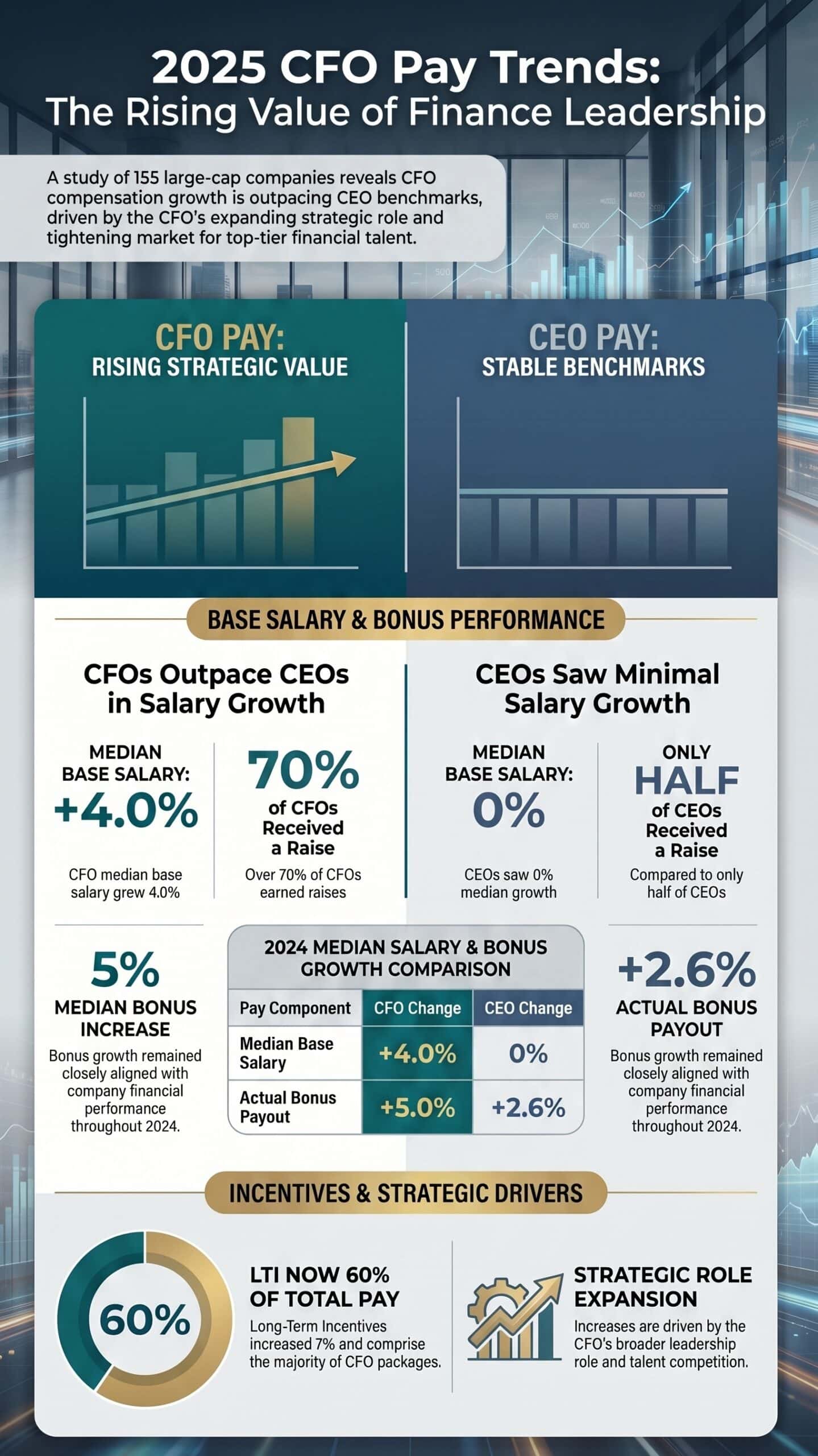
The 2025 CAPintel CEO and CFO Compensation Trends Report found:
- Median CFO base salaries increased 4% in 2024
- Median CEO salary increases were effectively flat
- More than 70% of CFOs received raises
- CFO long-term incentive compensation rose 7%
Why CFO Compensation Is Growing Faster
The finance chief’s responsibilities have expanded dramatically over the past several years. In many organizations, the CFO has become one of the most influential executives in the C-suite.
Modern CFOs are increasingly expected to serve as:
- Strategic advisors to CEOs and boards
- Leaders of enterprise transformation initiatives
- AI and technology investment decision-makers
- Risk management and cybersecurity partners
- Capital markets strategists
- Operational performance leaders
That evolution is creating fierce competition for experienced finance leaders, particularly those with public company, M&A, restructuring, or high-growth experience.
As a result, companies are using larger salary increases, equity grants, and retention incentives to secure top talent.

Equity Compensation Still Dominates Executive Pay
While CFO salary growth is attracting attention, CEOs still earn significantly more overall compensation, largely due to equity awards.
Most executive compensation packages remain heavily performance-based, with long-term incentives (LTIs) making up the majority of total pay.
According to the CAPintel report:
- LTIs represent approximately 60% of total CFO compensation
- Bonus payouts remained closely tied to company performance
- Compensation committees continue emphasizing pay-for-performance structures

Rising Executive Pay Is Fueling Demand for Fractional CFOs
As compensation costs rise, more companies are reconsidering whether they need a full-time permanent CFO, especially during periods of transition, rapid growth, restructuring, or operational change.
That’s one reason demand for interim and fractional finance executives continues to grow.
An experienced, vetted RED Team fractional or interim CFO can provide:
- Strategic financial leadership
- Capital planning expertise
- Cash flow management
- Investor and lender support
- M&A guidance
- Operational finance oversight
And they do all of that without the long-term compensation commitments associated with a permanent executive hire.
For middle-market and growth-stage companies, the model offers access to experienced leadership at a significantly lower overall cost.
It also provides flexibility during uncertain economic periods when organizations may not be ready to commit to a multimillion-dollar executive compensation package.
The Bottom Line
The 2026 executive compensation landscape highlights a major shift inside the C-suite: CFOs are becoming increasingly strategic, and increasingly expensive.
Reach out to us for a confidential conversation about how our vetted RED Team interim and fractional CFOs can drive the strategic finance leaders your organization needs at a fraction of the cost and none of the commitment involved in hiring a permanent full-time CFO. Our battle-tested CFO leaders can be onsite in as little as 48 hours, assessing the need, creating the plan, and leading the change.
Frequently Asked Questions
CFO pay is rising due to the expanding strategic role of finance leaders. Today’s CFOs often oversee AI initiatives, digital transformation, investor relations, risk management, and enterprise strategy in addition to traditional finance responsibilities.
Most compensation studies show CFOs earn roughly one-third of total CEO compensation. However, CFO salary increases have recently outpaced CEO salary growth in several areas.
Key drivers include competition for leadership talent, performance-based equity compensation, economic uncertainty, AI investment priorities, and increasing demands on executive leadership teams.
A fractional CFO is an experienced finance executive who works with a company on a part-time, project-based, or interim basis. Companies often use fractional CFOs to access high-level expertise without the cost of a full-time executive hire.
Rising executive compensation costs, leadership transitions, growth initiatives, and restructuring efforts are leading many organizations to seek flexible finance leadership solutions through interim or fractional CFO arrangements.