847.849.2800
 Contact
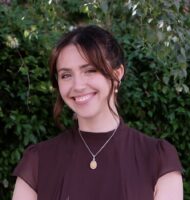

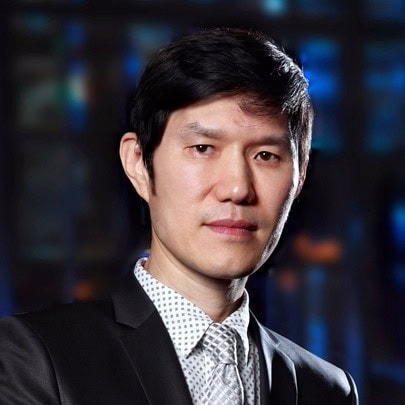
Shu Li is a scientist, professor, Fortune 50 senior executive, serial entrepreneur, and InterimExecs client. He has founded or co-founded multiple enterprises in the healthcare, biomedical, and semiconductor sectors such as Jazz Semiconductor, Huohong, NEC, Cellular BioMedicine Group, WA Health Centers, Helio Genomics, and Laboratory for Advanced Medicine & Health, and has served in key positions in Fortune 50 and Fortune 500 companies, including Intel, Motorola, AlliedSignal/Honeywell, and Conexant Systems. He also holds numerous patents, is published in top scientific journals, and co-authored four books on human longevity.
He sits down with InterimExecs to share his journey.
Q. What Was Life Like Growing Up in China During the Cultural Revolution?
My childhood was pretty rocky. Both of my parents were geologists and professors at the China University of Geosciences, so they would often leave me with my grandmother in Tianjin. My grandfather used to be one of the great industrialists in China and our family had large textile chemical factories. But when communists seized power, they took all the factories and all the businesses away.
I was about 7 at the time and they declared me to be bad blood, because I’m from a “bad family”; at that time, if you were rich, you were a bad family. I had barely started elementary school when the government shut down all of the colleges and most of the schools, and professors were considered bad people with “capitalist influences” who needed to be “re-educated.”
When I was 9, my mother and younger sister and I were sent to Jiangxi labor re-education camp while my father was sent to a re-education camp in Hubei. There was nowhere to stay when we arrived, so we had to make our own shelters. We basically used bamboo and thatch, and then there was no electricity, so we had to use candles or oil lamps at night. When it rained, it would leak through the roof all over us.
There were maybe 200-300 people in the labor camp, most of them professors and their families. As time went on, we were able to build our life there, growing a vegetable garden, raising animals like pigs, chickens, and ducks. Every fall, I had to go to the mountains for firewood to last us the whole winter. Basically, from age 9 to 15, I was doing all of that: I was surviving.
Learning Despite It All
My mother managed to secretly keep an ancient Chinese novel called Three Kingdoms. It’s a very famous Chinese novel based on history, and it’s one of the best strategy books. Every night before bed, after she finished work in the fields, my mother would read that novel to me under the oil lamp, and that was my education at the time. I was able to learn a lot of history, philosophy, strategy, and politics from that book.
When I was 15, professors started to be allowed to go back to the cities, so we went back to Beijing and I started middle school. However, at the time, most people only graduated middle school or high school and went into manual labor jobs, because the communists still wanted you to either go into farming and be a peasant in the countryside, or go work in a factory.
Another thing you could do was play sports after graduation, so I joined the middle school basketball team. I really didn’t have the talent to be a professional, it turns out, but I saw it as a way to not become a peasant.
Higher Education Returns
And then suddenly, when we got to junior high, Deng Xiaoping came into power, and he started to emphasize education and restore universities, so we were finally allowed to take national exams to be admitted to university.
I knew nothing and had basically a little more than half a year to prepare. I was very, very bad at math, because I never had much math education. I was very good at writing essays because I can be creative, but I worked day and night to try to catch up on all the pre-college studies. And so finally, I was lucky to get into a middle-level university.

US Studies
After ranking No. 1 in the national exams for post-graduate study at the National Academy of Sciences and earning a BS in Electrical Engineering at Huazhong University of Science and Technology, I was granted leave to pursue further study opportunities in the United States.
I received an MS in Electrical and Computer Sciences from the University of Illinois, Urbana-Champaign, and then a PhD in Applied Sciences at Harvard University with a thesis on applying generalized Markov chains to search optimization, which was published in IEEE Transaction.
Q. What Did Your Career Look Like After Completing Your Education?
When I was doing my PhD, I had no idea what I wanted to do after. But I ended up going to Tucson, Arizona, because I got a job offer to be a professor of systems engineering at the University of Arizona that would allow me to stay in the States, so that’s why I went.
After a couple of semesters, you start to teach the same class over and over, and that’s when I started to feel really bored. So during the summer, I called Intel and I said, ‘I’m looking for a summer job, I want to work for Intel. I went to Harvard, I know control theory, I know search optimization, all of it.’ And the guy on the phone said, ‘That’s all bullshit.’
So I called him the next day again and I said, ‘Give me your biggest challenge, and maybe I can figure it out for you. At least I’m smart.’ So he said, ‘Less talking, let’s try it.’
And that’s how I ended up spending the summer at Intel in Arizona, which at the time was a state-of-the-art semiconductor facility.
The Intel Challenge
The challenge he gave me was this: ‘My factory is very full, so I can’t really increase production. But if I can double my production, I can still sell, because the demand is there. Come figure it out.’
First of all, I had never worked in manufacturing or semiconductors, and I’d never had any management experience. I’d been in the States for less than four years, so I still really didn’t understand American culture that much, and my English was still very foreign.
When I got to the factory, I thought it was interesting, so I just focused closely on the task at hand; I didn’t have the maturity to think much further ahead about what I really wanted to do with my career, and I didn’t have anyone to coach me, to mentor me, to give me hints.
For a Chinese person to survive in America, our first instinct is to survive and not to think too much. We would work twice as hard as our American coworkers, we would overachieve to make sure we are successful and can survive in the United States.
‘It’s Fun in the Real World’
So I spent days and nights in the factory just observing, and after three weeks, I wrote him a report explaining what he should do to double production. And after seeing that, he said, ‘Why don’t you come to run the operations of the entire factory?’
I thought to myself, ‘It’s really fun in the real world.’ So at 29, I started to run the entire 7×24 operation of one of Intel’s largest semiconductor fabrication facilities in the United States, the Fab6, and over about a year and a half, we almost doubled production.
Then Motorola called me through a headhunter asking me to work for their R&D operations for all consumer electronics in Phoenix. The challenge Motorola gave to me was to improve the speed of new product development. By the time I left after two and a half years there, we tripled the speed of production for consumer electronics like chips for video cameras, cell phones, satellites and communication equipment.
Moving Beyond Semiconductors
My next gig came when a headhunter called me about a vice president job in California at a Fortune 50 company, AlliedSignal, which was later called Honeywell. It’s an amazing company, amazing job, but they said I’d be working in aerospace aviation. I said, ‘What? I’m in high tech!’
So I was still hesitant because I had a good career in semiconductors at this point. One day, the chairman of Honeywell, Larry Bossidy, called me and he said, ‘Shu, we need you.’ And I was like, ‘What? I’m a small potato, how could he be calling me?’ So finally, I decided to take a chance and become their VP of Engineering, even though I had no knowledge base for aerospace aviation.
But apparently they were impressed enough by what I’d done at Motorola.
Sometimes American corporate executives look for somebody who can innovate because they want to turn many businesses around, and some of the seasoned people may not be able to do it. So they look for somebody who can dramatically think differently and has the ability to act and execute. At the same time, they put all the checks and balances in place to watch over so you don’t make too big a mistake.
The way they used me at Honeywell was as a turnaround artist: basically, whichever division or subsidiary had any issues, they were parachuting me there to turn it around. I rotated through four jobs during the six years I was there: Vice President for its Aerospace Sector, VP engineering, VP Operations, VP/GM of Commercial Spares (a $1.7B revenue business), and VP/GM for Substrate & Interconnect businesses.
Breaking Through the Glass Ceiling
But at this point, I was still not totally waking up yet in terms of my career ambitions, even though it was a time of advancement on the corporate ladder. At the time, my thinking was, ‘Okay, I want to be as high in the corporate world as possible.’
However, there were also very strict corporate politics, and my peers were almost entirely white and older than me. I felt at the time that there was a huge glass ceiling that I couldn’t break through, because people looked at me differently; I was looking more like a super tool rather than part of the old boy network.
A super tool means they don’t mind paying me a lot, but they don’t think I’m really part of the top network of corporate executives.
So I became a little bit frustrated, and they felt they may lose me. So they offered to hire a coach for top executives, and she would teach me a lot of things. For example, she would take me to bars and say, ‘Okay, what is your drink order?” And I said, ‘Maybe a margarita.’ She said, ‘No. You have to project power, and you have to order Johnny Walker Black on the rocks to show your power.’
At the end of my career in Honeywell, I felt like I’d learned how to survive in big corporations, how to deal with the politics, and how to climb the ladder to the top.
How Did You Make the Transition from Corporate Employee to Entrepreneur?
It was only after I left Honeywell that I started to discover I’m actually a real entrepreneur. In 2000, I became Senior Vice President at Conexant Systems, basically the foremost semiconductor company and a former division of Rockwell International, where I really began my entrepreneurial journey.
Through a Carlyle Group Investment in 2002, I led the spinoff of Conexant’s captive semiconductor manufacturing operations, which at the time was close to being shut down due to high manufacturing costs in Newport Beach, California, into an independent high-performance specialty semiconductor foundry, Jazz Semiconductor.
We grew the company for five years, from a single captive customer into a foundry serving customers worldwide. When we went public on NASDAQ we sold to a special purpose acquisition company (SPAC) owned by Steve Wozniak, Apple’s co-founder, and Gil Amelio for $260 million.
During that time we also entered a joint China-Japan-US venture called HuahongNEC, one of the largest semiconductor manufacturers in China, through Jazz Semiconductor, and we helped to turn a really miserably failing business by the Chinese and Japanese around by completely changing the management and implementing RF technologies.
Tell Me about Your ‘Kindergarten Model.’
So, I’ve been exposed to many really good technologies, because over the years, lots of people know about what I’m doing: professors come to me, inventors come to me, and there are a portion of those projects that I consider to have good genes, born with good genes, because they have huge potential, good breakthrough technology. But if you don’t have a kindergarten to nurse them, to bring them up, they will die. Almost all of them are gonna die, because to start a business, to turn a technology into something useful in the real world, is very, very difficult. Good tech alone is not enough; it takes a lot of funding, it takes a business model, talents – it’s complex, the same way raising a good kid does not depend only on good genes.
How Did You Get into Healthcare, and What Role Did Your Entrepreneurial Background Play in This Transition?
Around 2007, I decided to retire, which lasted about half a year because I became so bored. So I went back to an earlier personal interest in oriental medicine, and I decided that I would dedicate the second part of my life to healthcare, anti-aging, and saving lives.
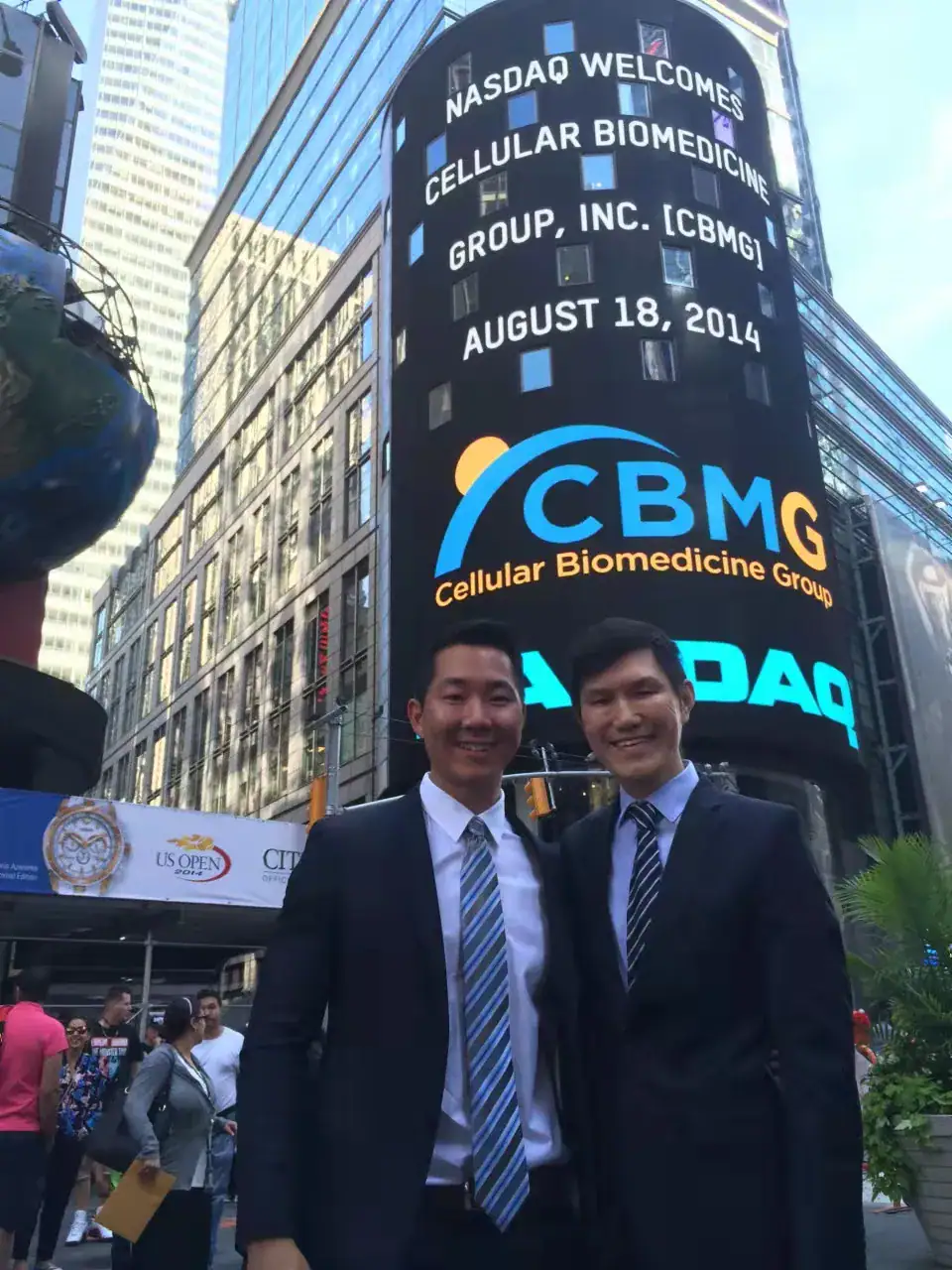
I started to think about commercializing innovative biomedical technologies. The next company I formed, in 2009, was the biopharmaceutical company Cellular Biomedicine Group, dedicated to CAR-T cancer immunotherapy and stem cell joint regeneration, which went public on NASDAQ in 2014.
Simultaneously, I invested and founded businesses such as WA Health Centers, a high-end medical services provider with two medical centers in Shanghai and Beijing for high net worth clients. That company later merged with NASDAQ: KANG in 2015.
At the time, I was very involved in the University of California; I was an adviser for the chancellor of UC Irvine and UCLA, and I was also sitting on the advisory board of the business school at UCI.
Ground-Breaking Healthcare Tech
Around 2012, I was made aware through the UC system about the UC San Diego Institute for Genomic Medicine, which published a pretty earth-shattering paper where a group of scientists argued in favor of using epigenomics to not only be able to diagnose cancer much earlier but to find a cure for cancer. This went against the prevailing theory that big diseases like cancer are only driven by gene mutations, and if we are able to find all these cancer-related mutations, we would be able to overcome cancer.
Epigenomics really has more to do with lifestyle and the environment and less to do with heredity. So these scientists actually applied their theory by testing thousands of patients’ blood samples, and it turned out they could pretty reliably diagnose cancer, Alzheimer’s, and other diseases. That was really ground-breaking.
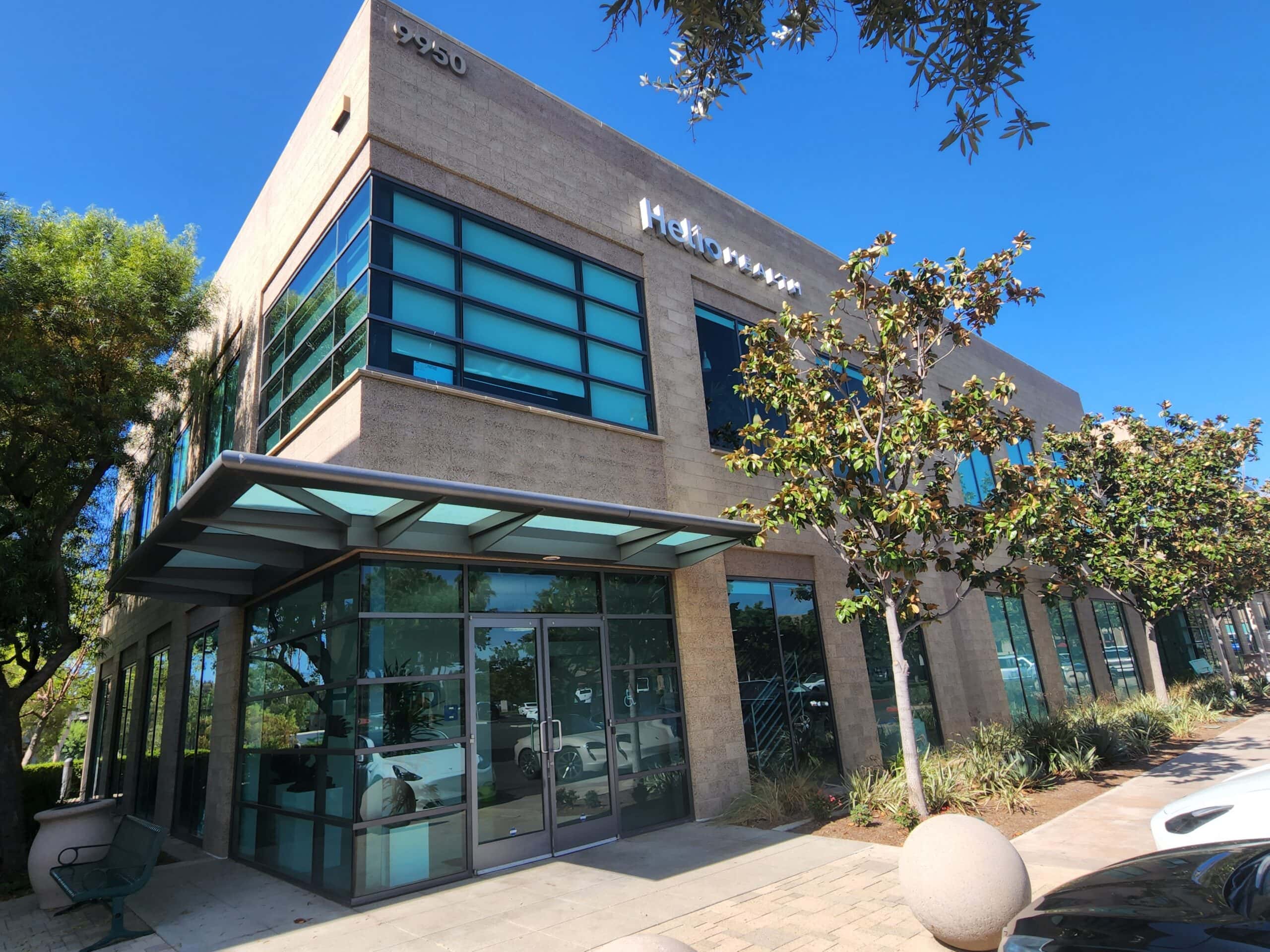
And of course, the Genomic Institute pioneered that technology using AI to get these results. So, by 2016, I decided to commercialize this technology and founded the AI-driven healthcare company Helio Genomics, through which we use next-generation sequencing tech to detect cell DNA methylation patterns from blood samples and identify unique biomarkers that signal cancer.
I’ve also formed a charity called Beyond Longevity, where we support anti-aging research.
_____
Shu Li turned to InterimExecs for help with his ground-breaking company, Helio Genomics. If your organization is in need of top-tier leadership, reach out to us online or text us at 847.849.2800 for a confidential conversation about how a RED Team interim or fractional CEO, COO or CFO can take you to the next level.