The landscape of the business world has always been in motion. Today, that reality is amplified. We’re operating in an era defined by unprecedented speed and interconnectedness, where disruptions can emerge from anywhere and reshape entire sectors overnight.
This hyper-dynamic environment makes traditional planning feel increasingly precarious. As Mike Tyson famously said, “Everybody has a plan until they get punched in the face.” Today, those punches can land swiftly and unexpectedly, making it difficult to predict what’s next.
The U.S. Army War College has an acronym for that: VUCA. It stands for:
Make leadership changes early to reset direction and build confidence.
Plan, Organize, Motivate, Control (POMC)
Share the battle plan so every employee understands their role in the turnaround.
Transform Company Culture
Create accountability and an entrepreneurial mindset throughout the organization.
Communicate Early & Often
Meet directly with employees, customers, and vendors to build trust during change.
Protect Cash Flow
Eliminate non-critical spending and improve liquidity to stabilize the business.
Focus on Sustainability
Build a business model designed for long-term success, not just short-term recovery.
Engage Employees
Involve employees because they often have the best ideas for improving operations.
Paul Fioravanti is a veteran interim executive. He is a turnaround expert who has been in some 90 engagements across 40 industries — as a CEO, COO, CTO (Chief Transformation Officer, CRO (Chief Restructuring Officer), General Manager or President.
So he knows a thing or two about how to get things done.
In our most recent Master Class video, InterimExecs CEO Robert Jordan talks with Fioravanti about his turnaround process and, in particular, his experience turning around Avara Pharmaceuticals.
Avara is a private equity-backed Big Pharma rollup that posted a loss of $45,000 and faced an imminent cash crisis and looming insolvency before Fioravanti came in as interim Chief Executive Officer. Thirteen months later, the company was $32 million positive and had achieved financial stability.
Stock market volatility. Rising unemployment rates. Still-high interest rates. Will those tricky statistics lead to an economic downturn? The jury is still out. But it makes sense to do what you can right now to recession-proof your business.
Whether you’re an entrepreneur, a small business owner, or a business leader overseeing a Fortune 500 mega-corporation, there are steps you can — and should — take right now to increase the chances your company will survive economic uncertainty.
Not long ago, InterimExecs was approached by a human resources professional who was concerned about the level of conflict among the members of the management team. The clashes had reached a point where they were, she said, ready to kill one another.
That got us thinking: Is conflict simply the nature of the beast these days?
Turns out the answer is no, according to Alicia Fortinberry and Bob Murray. Their company, Fortinberry Murray, is “committed to arming people and businesses with the knowledge and practical skills to build the organizations, communities, families and relationships that are compatible with our ‘design specs’ and enable people to be healthy and fulfilled.”
InterimExecs CEO Robert Jordan sat down with the duo to talk about conflict on management teams and how to handle it. This is an edited transcript of their conversation.
It’s tough to feel optimistic when your business is failing. But, InterimExecs RED Team executive Yoav Cohen knows how to save a failing business. “You almost always have a way out if you act quickly and decisively,” he says.
We asked Cohen to look at the most common reasons businesses fail, break down turnaround strategies for a company in crisis, and share his step-by-step action plan for struggling businesses.
Many private equity funds hear the words “interim executive” and think the only application is an Interim CEO or CFO for turnaround or short-term fill-in of a portfolio company. But PE funds seeking a great return look to interims for their unique abilities to build and transform companies.
An Interim CEO brought on to lead a recently acquired private equity portfolio company, for example, may match the hold period of the fund. That could mean several years of working to build, grow, and ultimately exit the company, hitting big returns for everyone involved.
Here are six major use cases for an Interim CEO, Interim CFO, or other interim executive in PE-backed portfolio companies:
1. Interim Executives in Diligence
Most funds hope to spread their wings and work beyond industries where they’ve already had success. In looking at new industries where acquisitions may cost less and produce higher returns, a little more diligence is often needed. The further afield a fund goes, the more they need expert leadership removed from prior operating teams.
We recently matched a $5B+ fund with an Interim CEO expert in e-commerce and consumer goods to help determine if a potential acquisition made sense. While the fund had deep experience in the manufacturing space, understanding the current challenges and opportunities to expand go-to-market strategy was essential. Once the deal closed, the executive transitioned into an ongoing advisor role to ensure the acquisition would be a success.
Interim executives, by definition, come into difficult situations, assess them quickly, and create a plan for success. That means they have a front-row seat to the most common business mistakes companies make in the areas of leadership, operations, human capital, strategy, business finances, and change initiatives.
Focusing on these fundamental business needs is a good starting point for any struggling business.
Interim executive compensation is customized based on scope, deliverables, and company complexity rather than a standard flat fee.
Flexible Billing Structures
Engagements are typically structured as daily/monthly retainers or project-based rates, sometimes including performance bonuses.
Zero Overhead Cost
Unlike permanent C-suite hires, interim executives do not require long-term contracts, severance packages, paid vacation, stock options, or health benefits.
Pay-for-Results Focus
Contracts can generally be terminated with 30 days’ notice, ensuring full accountability from day one.
Once owners, board members, and investors figure out exactly what an interim is and how an interim can help, the next question is: How much does an interim executive cost?
The short answer is: There is no off-the-shelf rate card for interim execs. Or more precisely, it doesn’t exist for the best interims in the world.
The first thing to understand about interim executive costs is to know that interim and permanent executive compensation is structured differently.
How Interim and Permanent Executive Pay Differs
There are many ways the compensation differs, including:
Contracts for interim executives are always short-term vs. the long-term arrangements you make with permanent hires.
Interims are focused on deliverables — our contracts can be broken with 30 days’ notice from either party — while permanent hires lock in long-term contracts that guarantee them a job in a fast-paced world. Or, at the very least, it guarantees them a hefty severance package if the contract is terminated early.
Interims are temporary workers, so they don’t get paid vacation, health benefits, stock options, or other extras, unlike permanent employees who will expect all of those.
Successful interims have to prove their value from the first day on the job — and every day thereafter or they’re gone.
Interims are comfortable with the ambiguity of business outcomes and are more likely to make bets on themselves performing well, knowing they don’t have that locked-in contract to rescue them.
Interim Executive vs. Permanent Executive Compensation
INTERIM EXECUTIVE
PERMANENT HIRE
Compensation Model
✓ Weekly or monthly contract rate
Salary plus bonus and long-term incentives
Contract Length
✓ Short-term engagement with defined objectives
Long-term employment
Benefits & Perks
✓ No health insurance, PTO, retirement, or equity
Benefits, PTO, bonus, equity, retirement plans
Performance Expectations
✓ Immediate impact and measurable deliverables from day one
Long-term leadership and organizational development
Compensation Risk
✓ Income depends on securing the next engagement
Stable salary regardless of project completion
Flexibility
✓ Typically 30-day cancellation clause
Longer notice periods or severance agreements
The structure of an interim’s contract can vary greatly. They may be paid hourly, daily, monthly, or project-based. Sometimes there is a performance bonus or even equity incentive if an interim is tasked with creating incredible growth in an organization.
Company Situations Vary Greatly
Your company is your baby and your baby isn’t like anyone else’s in the world. As such, the caliber of leader you need and the process and deliverables necessary to achieve the best outcome is a tailor-made solution – not an off-the-rack, one-size-fits-all experience.
We have talked to too many owners who are frustrated after shoveling out money to firms that in the end delivered a big binder containing pretty charts and templates, but no ability to execute.
If your company has particular needs, we will look for a specific fit with one of our RED Team interims, an elite group of interim, project, and fractional executives who have been selected because of their track records creating incredible results in companies.
Engagement Model
Best For
Typical Compensation
Typical Duration
Full-Time Interim Executive
Executive vacancy, turnaround, crisis management, or major transformation
Weekly or monthly rate
3-18 months
Fractional Executive (1-3 days/week)
Ongoing strategic leadership without a full-time commitment
Hourly, day rate, or monthly retainer
Ongoing (typically several months to multiple years)
Project-Based Executive
M&A integration, ERP implementation, restructuring, fundraising, or other defined initiatives
Fixed project fee or milestone-based pricing
Until project completion
Your Situation is Unique
A doctor wouldn’t give you a prescription or treatment plan before they hear your symptoms. The same goes for an interim.
When we set up a call with an interim executive, they immediately assess:
what you want to accomplish,
what is needed to create a successful outcome for the company, and
whether they are excited about the challenge and believe they can provide value.
After they hear you out, we will put together a custom plan for you that defines time, commitment, and compensation. Any less than a thoughtful process means you’re likely going to get a mediocre result.
At InterimExecs, we treat your situation as unique, and therefore put time and effort to match you with an executive right for you, as well as a tailor-made compensation plan.
Need help now?
Request a Confidential Call
Are you ready to explore how an InterimExecs RED Team member can meet the needs of your company? Contact us or call +1 (847) 849-2800
No benefits, severance, health insurance, or paid time off. Equity can occasionally be a factor for interim roles if the executive is tasked with building value to point of sale or another big exit.
While an interim’s effective daily or monthly rate may be higher, you pay strictly for the time needed without executive search fees, long-term bonuses, or benefits packages. The interim is also wired for fast value creation or turnaround, bringing an organization to a point of stability before handing off to a permanent hire.
Cost depends on the role (CEO, CFO, COO, CIO), company size, stage of business (growth, turnaround, crisis), and whether the scope requires full-time or fractional commitment.
First, the good news: Corporate bankruptcies in 2022 have been running below average. Now, the bad: That is about to change. Big time.
Government stimulus, post-pandemic demand, and historically low interest rates combined to give companies the edge during the first half of 2022. Organizations that survived the pandemic shutdowns thrived as the world recovered.
In fact, Cornerstone Research, which tracks business bankruptcy trends in Chapter 7 and Chapter 11 bankruptcy filings by companies with assets of $100 million or more, says in its midyear 2022 update report that there were only 20 bankruptcies filed by companies with $100 million plus in asset during the first six months of the year. It’s the lowest midyear total since the second half of 2014.
But the US Federal Reserve is waging war on inflation with historically fast increases in interest rates – more than 3 percentage points in just six months. That, coupled with the threat of a global economic recession, is spelling trouble for highly leveraged companies and underperforming firms.
We asked two turnaround specialists to walk us through the highly charged bankruptcy landscape as 2023 looms.
Way back in 2009, the Great Recession hit America. And it didn’t pass me by.
In case you don’t remember how bad things were, let me refresh your memory: Bear Stearns failed. Lehman Brothers failed. Merrill Lynch sold for next to nothing. Countrywide Mortgage sold for pennies on the dollar. AIG had to be propped up by the federal government. General Motors went bust, was put on life support thanks to the federal government. People were worried. They wondered whether they would go to the ATM one day and no cash would come out because their bank had failed.
And me? I was at a startup called PV Powered. We were developing the next generation of commercial and utility grade solar inverters. We had about 100 angel investors and we were burning $750,000 a month when the Great Recession hit despite as much bootstrapping as possible. The next thing we knew, 98 percent of the investors had backed out, equity stake be damned, announcing they would no longer support the company. And who could blame them?
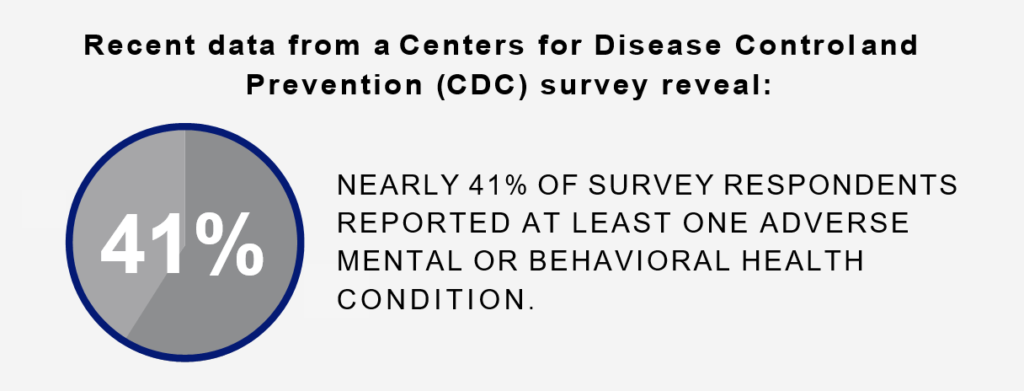
When teams struggle, it affects their productivity and the company’s bottom line. As part of a research team that evaluated the effects of another “Black Swan” event, Hurricane Katrina, I can draw direct inferences from those effects to the impact of COVID-19 and the time that it will take teams to recover.
We know how important this issue is because we hear the refrain from business owners and executives every day: You’re exhausted. Your teams are exhausted. And you worry that there’s far more under the surface, things your teams are experiencing that they’re just not talking about.
Chances are, you’re right.
Do you know whether your team might be experiencing these effects?
COVID-19 has caused unprecedented disruptions to the healthcare sector. Since the pandemic hit, hospitals and providers have had to deal with a surge in very sick, high-intensity patients while also having to shut down a huge portion of their traditional business. As non-urgent visits and procedures were cancelled, overall surgeries and hospital admissions plummeted. The combination of lower patient volumes, cancelled elective procedures, and higher expenses tied to the pandemic have created a financial crunch for hospitals, which are expected to lose $323 billion this year, according to a report from the American Hospital Association.
These drastic developments come at a time when the healthcare industry is already grappling with challenges posed by the digital transformation happening around electronic health record (EHR) implementation, Meaningful Use (MU) standards, HIPAA compliance, and the CMS’s Interoperability and Patient Access rule. The result is a reckoning throughout the country’s healthcare infrastructure, with a need for rapid changes and new thinking.
Everybody might be in the red right now, says RED Team member John Winenger, a veteran healthcare executive. “But how much is going to come back is the big question that everybody’s rapidly trying to assess.”
We spoke to Winenger and Michael Kreitzer, an expert hospital Interim CIO, about the biggest challenges providers and hospitals are facing, where healthcare goes from here, and the moves organizations can make—including bringing in outside help—to get out of the red and back into the black.
First-year Change Agent members have access to the Interim Institute’s 4 hour audio program on the Fundamentals of Interim Management, and a one-hour strategy session to help jumpstart their interim career.
Interim Nonprofit Executive
Join our InterimExecs eNewsletter
This website uses cookies to give visitors the best user experience. To learn more, visit our Privacy Policy.
This website uses cookies to improve your experience while you navigate through the website. Out of these, the cookies that are categorized as necessary are stored on your browser as they are essential for the working of basic functionalities of the website. We also use third-party cookies that help us analyze and understand how you use this website. These cookies will be stored in your browser only with your consent. You also have the option to opt-out of these cookies. But opting out of some of these cookies may affect your browsing experience.
Necessary cookies are absolutely essential for the website to function properly. These cookies ensure basic functionalities and security features of the website, anonymously.
Cookie
Duration
Description
cookielawinfo-checkbox-analytics
11 months
This cookie is set by GDPR Cookie Consent plugin. The cookie is used to store the user consent for the cookies in the category "Analytics".
cookielawinfo-checkbox-functional
11 months
The cookie is set by GDPR cookie consent to record the user consent for the cookies in the category "Functional".
cookielawinfo-checkbox-necessary
11 months
This cookie is set by GDPR Cookie Consent plugin. The cookies is used to store the user consent for the cookies in the category "Necessary".
cookielawinfo-checkbox-others
11 months
This cookie is set by GDPR Cookie Consent plugin. The cookie is used to store the user consent for the cookies in the category "Other.
cookielawinfo-checkbox-performance
11 months
This cookie is set by GDPR Cookie Consent plugin. The cookie is used to store the user consent for the cookies in the category "Performance".
viewed_cookie_policy
11 months
The cookie is set by the GDPR Cookie Consent plugin and is used to store whether or not user has consented to the use of cookies. It does not store any personal data.
Functional cookies help to perform certain functionalities like sharing the content of the website on social media platforms, collect feedbacks, and other third-party features.
Performance cookies are used to understand and analyze the key performance indexes of the website which helps in delivering a better user experience for the visitors.
Analytical cookies are used to understand how visitors interact with the website. These cookies help provide information on metrics the number of visitors, bounce rate, traffic source, etc.
Advertisement cookies are used to provide visitors with relevant ads and marketing campaigns. These cookies track visitors across websites and collect information to provide customized ads.
 847.849.2800
 Contact