Three Reasons Fractional Leadership Continues to Grow
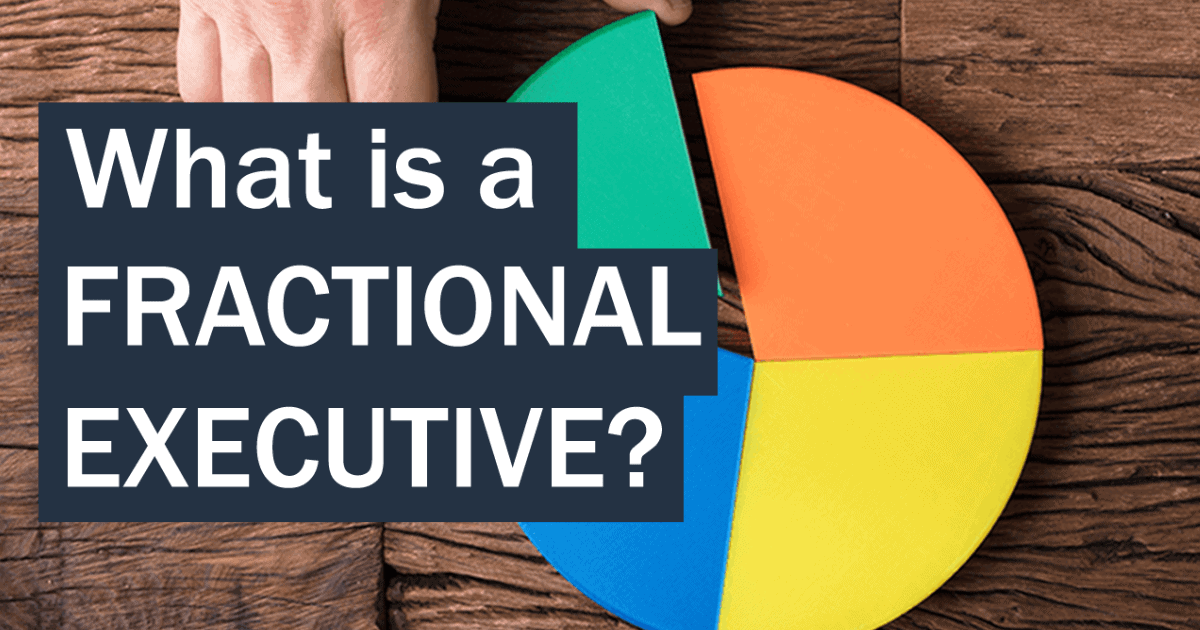
A fractional executive is senior leadership without full-time commitment
Fractional executives provide C-suite-level strategy, decision-making, and accountability on a part-time basis aligned to actual business needs.
Offers a flexible, lower-risk, lower-cost alternative to full-time hiring
Boards gain experienced leadership while controlling costs, reducing long-term obligations, and maintaining the ability to scale involvement up or down.
Built for moments that matter most
Fractional executives are especially effective during growth, transformation, transitions, and periods where targeted expertise delivers outsized impact.
Fractional executives, including fractional CEOs, CFOs, COOs, and CIOs, are the hottest thing in the C-suite. What started as a niche workaround has gone mainstream, with companies from fast-scaling startups to Fortune 500s tapping part-time leaders for big-impact roles.
These aren’t consultants or advisors; they’re deeply embedded executives, delivering high-level strategy, leadership, and results without the cost or commitment of a full-time hire.
But what exactly is a fractional executive? How is this different from an interim or full-time hire? And when does it make sense to go fractional in the first place?

Complexity is the trigger: When financial decisions, forecasting, or cash flow questions outgrow basic accounting, it’s time for CFO-level strategy.
Growth events often require a CFO: Fundraising, M&A, expansion, or operational inefficiencies are common points where companies, especially startups, bring in a CFO.
You don’t always need full-time: Interim or fractional CFOs provide senior financial leadership without the cost or commitment of a permanent hire.
Whether you’re running a startup, scaling fast, or facing financial complexity, the question eventually comes up: Is it time to hire a CFO? This guide breaks down when to bring in a full-time, fractional, or interim CFO — and how to know which one is right for your company’s stage.
Global CFO turnover hit a seven-year high in 2025 and departures remain elevated across both public and private sectors.
The Succession Gap
Only 16% of organizations have a proactive CFO succession plan, leaving 84% exposed to sudden financial leadership gaps.
The Interim Advantage
A vetted interim CFO bridges the vacancy immediately, maintains financial continuity, and can assist in onboarding or mentoring the permanent successor. It’s no surprise, then, that 12 percent of CFO appointments in Q1 2026 were interims, up from 6 percent in 2025.
A whopping 262 CFOs left their jobs globally in 2025, continuing a multi-year trend of high turnover. In the S&P 500 alone, CFO turnover surged to a record 106 appointments in 2025, up sharply from 89 the year prior. The pace cooled a bit in Q1 2026, but remains well above historical norms.
89 CFOs were appointed globally, down from 95 in Q1 2025, the first Q1 YoY decline in CFO appointments since 2022.
6.6 percent of S&P 500 companies appointed a new CFO, on par with Q1 2025 record levels.
Nearly half of newly appointed CFOs were external appointments, a Q1 high.
Interim CFOs accounted for 12% of newly appointed hires in Q1 2026, up from 6% in 2025, suggesting more organizations are relying on temporary finance leadership while they manage unplanned departures or extend the search for a permanent successor.
SEC Filings and Beyond
Historically, the workload of a CFO at a public company was focused on compliance with Securities and Exchange Commission filings, best accounting practices, and financial reporting.
Today, Chief Financial Officers — whether they work at a public company or a private one — need far more than stellar accounting skills.
As Russell Reynolds put it: “Organizations faced greater pressure to communicate through uncertainty — on performance, outlook, and fast-evolving topics such as tariffs and AI — putting a premium on CFOs who can articulate the path forward in high-stakes forums.”
Boards and CEOs want CFOs who can operate as strategic thought partners, build confidence with investors and the board, and lead through volatility and transformation, the consulting firm says.
Change is Not New
The role of the CFO has evolved over the last two decades, due to the accelerated pace of the digital age. Today, a CFO must not only understand a business from start to finish to provide financial excellence, but also must predict what is coming from a strategic standpoint and be ready to evolve.
The hardships that came with the 2008 recession pushed CFOs to serve in a more strategic role, one that focuses on people, strategy, and externally focused communication.
The CFO of 10 years ago is the Controller of today.
— Deborah O’Connor, CFO
Great CFOs cross borders as well, whether private, public, private equity-backed, or family-owned. O’Connor said that while you might have different constituencies in each of those types of organizations, the foundation is the same: controls have to be in place, good projections must be forecast, decisions on prioritization must be made.
Most importantly, a successful CFO must bond with the CEO, empowering them to take the charge forward in a positive direction.
How to Find the Right CFO for Your Company
In a perfect world, every organization would have a well-thought-out succession plan that would be activated when a CFO resigns, retires, or is promoted. But this is a far from perfect world. Only 16% of CFOs told Russell Reynolds that their organization has a proactive succession plan in place.
Even if there is a plan in place, chances are strong there will be a financial leadership gap.
The implication for companies is clear: CFO turnover is no longer an occasional disruption, it’s an ongoing reality. With leadership transitions happening more frequently and often with little warning, organizations that lack a clear succession or contingency plan are increasingly exposed. This is where interim CFO leadership becomes critical, providing stability, continuity, and experienced financial oversight during periods of transition.
A high-quality interim CFO can immediately jump in to provide a fresh outside perspective to assess the organization and team and create a roadmap to keep forward movement. An interim can also identify what is needed in the next full-time CFO, assist with the CFO search or mentor a team member internally to eventually step into the role.
“It’s a calming notion to have someone come in and fill the seat so the seat is not empty for very long. It gives people someone to look up to, to talk to and share their anxieties with,” says Interim CFO Larry Firestone, who has led companies from startup to a $500 million public energy company.
Larry is an experienced Chief Financial Officer on InterimExecs’ RED Team, an elite team of top CFOs and other C-suite leaders who bring a variety of industry experience in growing and turning around companies.
He has seen operations come to a halt when the CFO role goes vacant. “An Interim CFO is a senior executive that has seasoning and talent and experience that the team can relate to,” he says. “They calm everyone down, and it’s really about keeping the company moving and running the way it should.
Most interim appointments last for eight months, though can range anywhere from a few months to several years. CFOs on InterimExecs RED Team are experts at stepping in during periods of transition, and stay on until a new full-time hire is onboarded and ready to take over.
In some cases, companies ask our experienced interim execs to stay on the job for a short time to mentor the new hire through those first few months and ensure a smooth handoff.
Which Public Company CFOs Resigned, Retired, or Were Promoted Recently?
Companies that changed CFOs in 2025 include:
Starbucks: Appointed a new CFO in 2025 following the installation of Brian Niccol as CEO in September 2024.
Boeing: Announced a CFO transition in 2025 as part of broader leadership changes following a CEO transition.
UnitedHealth: Named a new finance chief in 2025.
Lockheed Martin: Appointed an internal candidate to the CFO role in the first half of 2025.
Automatic Data Processing (ADP): Filled its CFO seat with an internal veteran in early 2025.
Jack in the Box: Promoted an insider to CFO in 2025.
CFO turnover reached a record high in 2025 due to increased role complexity, higher expectations from boards and investors, and rising retirement rates. The role has expanded beyond finance into strategy and transformation, increasing pressure and burnout.
Turnover has remained elevated for several years, with 316 new CFO appointments and 262 departures globally in 2025, according to the consulting firm Russell Reynolds, which tracks CFO comings and goings.
Companies often face disruption in financial reporting, investor confidence, and strategic planning. Many organizations bring in an interim CFO like those experienced, vetted CFOs from InterimExecs RED Team. They are tasked with maintaining continuity while the company searches for a permanent hire. Oftentimes, the interim CFO will stay on for a few months to mentor the incoming CFO and smooth the transition.
No. Only about 16% of CFOs say their organization has a proactive succession plan in place, which increases risk when unexpected departures occur.
An interim CFO is most valuable during sudden departures, retirements, M&A activity, or periods of financial instability, any time continuity and experienced leadership are critical.
Market volatility, supply chain disruptions, and rapid technological change have left many companies in need of effective leadership. Often, those companies turn to consultants for instant help. But they continue to struggle. Why? Because consultants strategize and deliver impressive decks. But they don’t stick around to turn those ideas into results.
What those companies really need is an effective leader who can strategize, AND deliver results. And they need it now.
The answer is a rock star interim executive who can be on-site, taking charge and making progress in as little as 48 hours.
When technology stalls or transformation fails, it’s rarely because of tools or code. More often, the root issue is leadership — misaligned, ineffective, or stuck in the weeds.
That’s where interim CIOs step in. The best ones don’t just manage systems. They stabilize teams, reset direction, and accelerate outcomes — often under immense pressure and tight timelines.
At InterimExecs, we work with elite interim leaders across the globe through our RED Team. We sat down with some of our top-performing interim and fractional CIOs to understand what separates the good from the truly great.
Not every company needs a full-time CIO (Chief Information Officer). But nearly every company needs smart, strategic technology leadership.
Enter the fractional CIO — a senior executive who brings years of tech and business experience to your company on a part-time or project basis. Whether you’re scaling fast, modernizing outdated IT infrastructure, preparing for a sale, or looking for IT to fuel your business growth, a fractional CIO gives you the leadership you need — without the full-time overhead.
So, you’re scrolling through LinkedIn or looking at an org chart and you see “Acting VP of Whatever” or “Acting CEO.” What’s the real deal there?
In a public company, “acting” or “interim” almost always says the same thing: “We’re in between permanent hires.” But look a little deeper and you may find some significant differences between one acting executive and another.
So you’ve decided to bring in an interim executive. Perhaps you need to temporarily fill a leadership role while you conduct a thorough search for a new permanent hire. Or maybe you need an experienced leader to spearhead a new initiative or helm the launch of a new product. Or maybe your company is in crisis and you need a turnaround expert to right the ship.
Whatever the reason you have chosen to bring on an interim executive, you are about to work with someone who works differently. That’s because interims are wired for action.
Here are 11 things to expect from an interim executive during their first 30 days on the job.
CFOs at private companies may come and go with little fanfare or long-term damage to the organization. But the sudden departure of a chief financial officer from a publicly traded company can send a tidal wave of worry through investors, employees, and stakeholders alike.
The CFO is the financial compass, the strategic partner, the place where the buck stops when it comes to fiscal responsibility and reporting.
And when the CFO role at a public company is vacant, the urgency to fill the void is paramount. “Later” simply isn’t an option. Let’s delve into why a public company needs a strong CFO, and needs them now. And then we’ll explore why an experienced interim CFO for public companies is the right way to bridge the gap.
PwC’s 2023 M&A Integration Survey found that just 14 percent of respondents reported achieving “significant success” in a merger or acquisition. The “secret sauce” to their M&A success? A whopping 88 percent point to the importance of IT integration.
Despite that, the fast-paced world of mergers and acquisitions often means that information technology concerns take a backseat to strategic business objectives during due diligence.
You’re on a public company board and the phone rings at midnight and it’s not good news: Your CEO or CFO has passed away. The next morning, the board convenes in emergency session. There’s only one subject beyond condolences for the tragic passing: Who is going to step into the interim CEO or CFO role?
Will you choose a placeholder from among your board, or will you choose to do something more proactive?
Interim executives — experienced C-suite leaders who take on short-term roles — traditionally are found in turnaround situations, coming in to save companies on the brink. Or they are brought in to keep a company moving forward while a new permanent hire is identified and onboarded.
But there’s another leadership role that is tailor-made for an interim leader: Using their skills, experience and executive talent to guide fast-growing companies.
An experienced interim executive is the right leader for companies facing big points of change or growth. Interim and fractional executives often step in to address growing pains many organizations feel when they lack the systems and processes to scale. On the other hand, interim executives jump in as a key part of the diligence or post-acquisition integration strategy for companies and private equity firms leveraging an M&A strategy to expand.
First-year Change Agent members have access to the Interim Institute’s 4 hour audio program on the Fundamentals of Interim Management, and a one-hour strategy session to help jumpstart their interim career.
Interim Nonprofit Executive
Join our InterimExecs eNewsletter
This website uses cookies to give visitors the best user experience. To learn more, visit our Privacy Policy.
This website uses cookies to improve your experience while you navigate through the website. Out of these, the cookies that are categorized as necessary are stored on your browser as they are essential for the working of basic functionalities of the website. We also use third-party cookies that help us analyze and understand how you use this website. These cookies will be stored in your browser only with your consent. You also have the option to opt-out of these cookies. But opting out of some of these cookies may affect your browsing experience.
Necessary cookies are absolutely essential for the website to function properly. These cookies ensure basic functionalities and security features of the website, anonymously.
Cookie
Duration
Description
cookielawinfo-checkbox-analytics
11 months
This cookie is set by GDPR Cookie Consent plugin. The cookie is used to store the user consent for the cookies in the category "Analytics".
cookielawinfo-checkbox-functional
11 months
The cookie is set by GDPR cookie consent to record the user consent for the cookies in the category "Functional".
cookielawinfo-checkbox-necessary
11 months
This cookie is set by GDPR Cookie Consent plugin. The cookies is used to store the user consent for the cookies in the category "Necessary".
cookielawinfo-checkbox-others
11 months
This cookie is set by GDPR Cookie Consent plugin. The cookie is used to store the user consent for the cookies in the category "Other.
cookielawinfo-checkbox-performance
11 months
This cookie is set by GDPR Cookie Consent plugin. The cookie is used to store the user consent for the cookies in the category "Performance".
viewed_cookie_policy
11 months
The cookie is set by the GDPR Cookie Consent plugin and is used to store whether or not user has consented to the use of cookies. It does not store any personal data.
Functional cookies help to perform certain functionalities like sharing the content of the website on social media platforms, collect feedbacks, and other third-party features.
Performance cookies are used to understand and analyze the key performance indexes of the website which helps in delivering a better user experience for the visitors.
Analytical cookies are used to understand how visitors interact with the website. These cookies help provide information on metrics the number of visitors, bounce rate, traffic source, etc.
Advertisement cookies are used to provide visitors with relevant ads and marketing campaigns. These cookies track visitors across websites and collect information to provide customized ads.