How to Achieve Maximum Results with Strategic Alignment

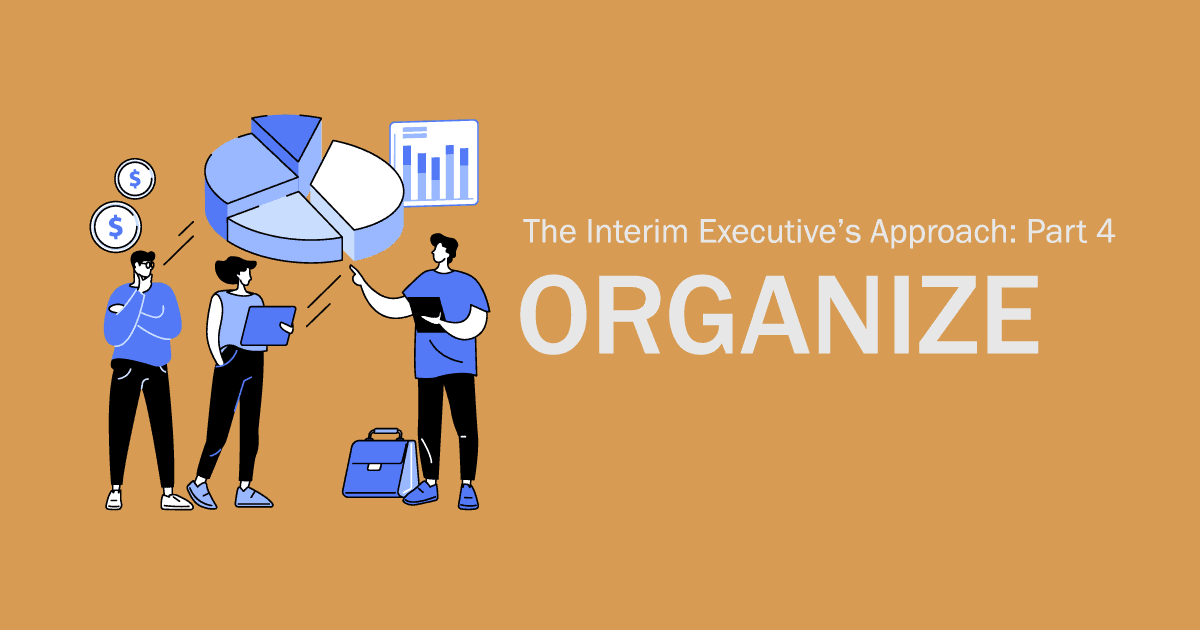
In his book, The Future of Your Company Depends on It, marketing expert Al Reis illustrates the power of focus using light energy as an analogy. The sun, emitting billions of kilowatts of energy will only give us sunburn, while a laser using a tiny fraction of that amount of light energy can cut steel. One key to optimizing organizational performance is ensuring complete strategic alignment of the business goals, creating laser focus on what matters most.

That requires looking at the alignment of human resources— from the executive team to front-line employees — as well as the alignment of products, assets, and strategic decisions. 

In the big picture, ineffective organizations struggle to gain results from solid strategic planning and execution while highly aligned organizations can see benefits even from weaker plans and strategy execution. Great companies find a competitive advantage in optimizing organizational structure to drive superior results. 

Interims understand the importance of strategic alignment. They view people, products, services, processes, technology, systems, methodologies, and other assets as investments that must yield a meaningful ROI and drive efficient operations and ever-increasing sales. 

Read More

What Is an Interim Executive Director? A Guide for Nonprofit Boards
The Big Idea

An interim Executive Director is an experienced nonprofit leader hired for a defined period, often during the search for a permanent ED. The interim leads operations, keeps the organization moving forward, supports staff and the Board, maintains donor and funder confidence, and prepares the organization for a successful permanent leadership transition.

Why More Nonprofits Are Using Interim Executive Directors

The concept of an Interim Executive Director (ED) isn’t well-known among nonprofit organizations…yet. But it’s becoming more mainstream and for many good business reasons.

On average, it takes a Board of Directors many months to recruit a new Executive Director. By the time they are onboarded and contributing, a year may have passed since the departure of the prior nonprofit leader.

Read More
Decoding Executive Titles: The Difference Between Interim, Project, Part-Time & Fractional Executives
Key Takeaways

Comparing Executive Engagement Models

  • Interim Executive


Full-time, temporary C-suite leadership (3–24 months) brought in for rapid growth, turnarounds, or bridging major transition gaps.

  • Fractional Executive


Part-time, ongoing leadership (e.g., 1–2 days/week) providing high-level strategy for companies that don’t need or can’t afford a full-time executive.

  • Project-based Executive

Targeted C-suite expert hired for a specific deliverable or one-time event (M&A integration, ERP rollout, international expansion) with a defined end date.

  • Acting Executive

Temporarily fills the seat during a search. Often an internal employee filling in, unlike a career interim who is brought in strictly from the outside to drive transition.

Interim, acting, project, contract, fractional, part-time. The array of executive titles can make your head spin. But they all point to a specialized type of executive that companies call on when they are going through transformation.

What is an interim executive and how does that differ from a part-time executive, a project executive, or fractional executive?

Let’s break it down.

Read More
Executive-as-a-Service Can Solve Your Leadership Problems Like SaaS Solved Your Outdated Software Problems

For years, companies have used SaaS – Software-as-a-Service – to solve their technology problems. No more buying expensive software. No more hiring experienced managers to oversee its installation. No more worrying about updates. It’s all handled by the pros and the service lives in the cloud, ready for your people to access the minute the need arises.

Now, companies are discovering that EaaS – Executives-as-a-Service – can just as easily solve their c-level executive challenges.

What is Executive-as-a-Service?

Like SaaS, which is subscription-based on-demand access to digitals tools, EaaS is on-demand access to executive leadership, whether you need the skills of a chief financial officer, chief marketing officer, chief operating officer, chief technology officer, or any other type of “chief.”

EaaS allows you to pay only for the c-level expertise you need and only for as long as you need it. No pricey executive search fees. No hiring bonuses No long-term contracts. No human resources expenses. As a cost-effective alternative to onboarding any type of full-time chief executive, the EaaS model means that even small businesses can afford experienced, effective leadership.

Executive-as-a-Service leaders are interim or fractional executives with a wealth of experience managing companies through big challenges such as rapid growth or decline, mergers or acquisitions, new market demands, and dried up funding.

Read More
Executive Matchmaking and the Sacred Trust of Ownership

When you own the company, it’s nothing like being an employee. You might as well compare lifting up a hundred pound weight versus a feather.

Through the years I’ve owned or been a shareholder in a number of companies. So when I initially started a career taking on interim assignments – in my case helping companies prep for sale and ultimately exiting to a financial buyer or strategic investor – I approached every company as if it was my own.

Only in running and owning a company can you know firsthand the sleepless nights.

Pondering everything. Like cash flow.

Hiring and retaining your best people.

Making payroll.

The questions are endless: how do we compete better? How do we win ridiculously large contracts? What do we do if the market goes down? How do we make our marketing viral?

Ownership is not for everyone and it is easy to feel….well, alone.

Read More

A Look Back on 2021 and the RED Team

As we reflect on the past year, we are grateful to the incredible executives that make up InterimExecs RED Team, as well as our clients who have put their faith in us and the leaders we deploy. We’ve jumped into companies from fintech to healthcare to manufacturing. Some struggling with declining revenue, lack of systems and process, or high turnover. Others experiencing big growth — maybe even spurred on by the last two years in a pandemic and changes to consumer behavior.

We’ve wrapped up a few top highlights from the year here: 2021 Year in Review

Wishing you and your families happy holidays and a prosperous New Year!

2021 YEAR IN REVIEW

Company owners and investors call us wanting to brainstorm about the type of leaders they need, which is great – right up our alley.

Why do companies call us saying they need an interim executiveA top interim put it this way: companies show up because something is going really, really right. Or because something has gone really, really wrong.

Fitting into one of those categories is just the start of the conversation. We also must determine if an organization is the right fit to work with InterimExecs RED Team.

We have invested 12 years and thousands of man-hours screening, ranking, and choosing the most talented CEOs, CFOs, COOs, and other executives across the C-suite to form the RED Team. That work continues every day, curating top talent for leadership on demand. These relationships are dear to us, so just as we screen executives, it’s important that we also screen companies that want to land a great executive.

Would your organization be a good fit for us and the RED Team? We have listed the top three factors we seek in both executives and companies we choose to match for talent.

Let’s explore this together and see how we match up in our leadership on demand values and your company’s goals:

Read More

Top Signs You Need an Interim Executive

InterimExecs RED Team of top interim and part-time executives around the globe range in specialties from CEO to COO, CIO, CFO, CMO, and CSO. But, title is not the main focus. Interim executives are often project-based resources that can be pulled in alongside the current management team to carry out big projects, mentor someone internally, or assess how your business is doing and create a roadmap for the future.

If you meet the following criteria, we can probably help:

Read More

5 Trends Expanding the Need for Interim Executives Now

Even before the pandemic forced businesses to be more nimble and forward-thinking than ever before, the need for interim executives had been growing. In 2020, we asked 600+ execs to shed light on interim roles, a comprehensive survey that covered the who, what and why behind the growth of this category. And now as the world is finally defeating COVID-19, businesses are continuing to adapt and re-strategize with a new set of challenges, only amplifying the need for experienced, “make it happen” interim executives even more. 

To better understand how the current marketplace is dictating the need, we conducted a follow-up survey, asking 125 executives to answer the same question: What trends do you anticipate having the greatest effect on the interim specialty in the year ahead?” 

Interim Management Trending Up

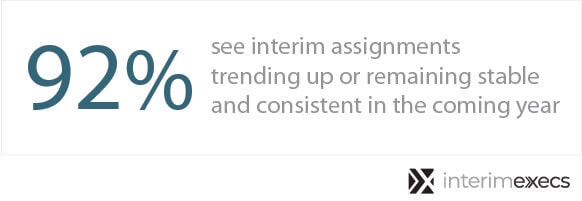
Across both surveys, the conclusion was clear: interim executives are needed now more than ever. 71% of respondents see opportunities for interim management trending up and another 21% seeing they will remain stable throughout the coming yearHere, we break down the five reasons why more organizations are drawing on interim executive leadership:

Read More

Great Interim Executives Are Partners

When smart owners hire managers with the intent of working together for a long time, it’s easy to call their relationship – if it works – a partnership. It’s not a partnership in the legal sense and it’s not a partnership in the investment sense, where partners share costs and gains.

But in great working relationships between employer and employee, each looks out for the other. Each invests to build and maintain a good relationship and share the gains of working well together and advancing the mission and economic and social health of the organization.

The problem with rampant outsourcing is that it leads to thinking on the part of employers and contractors that relationships are reduced to a transaction. Pay me X and I’ll perform as ordered. Stop paying me and I’m gone.

The logic is the same whether it’s one contractor or ten thousand. While it is transactional in the letter of the contract, it is not in the spirit of one.

The danger of a purely transactional mindset is that loyalty goes out the window. Loyalty from a boss to an employee and loyalty from an employee or manager to the organization.

In organizations with a strongly transactional bent you can bet that any corporate talk about integrity is a watered-down concept at best.

Read More

5 Times Companies Should Choose Interim Management Over a Full-Time Executive

Having a qualified and competent executive management team is integral to the success of any organization. Problems arise, however, when an executive suddenly vacates a position or there is a mismatch between the internal capabilities of a leadership team and the actual skillsets needed for a specific stage of a company’s growth.

Red flags may start to arise in an organization whether it be a lack of a clear vision, high team turnover, stagnant sales, missing innovation, or breakdowns in communication. The knee-jerk reaction of many companies is to look at a leadership change via a full-time executive search, which can take 6-9 months and include long-term contracts with added costs of perks like severance and benefits.

The world of interim management, a specialty that has grown significantly through the years, has offered an alternative route for companies wanting to maintain forward motion while re-evaluating what is needed to take them into the future. As opposed to a full-time executive search, interims can be on board in a matter of days and come with flexible contracts and pricing models.

Executives who specialize in interim management have track records building, fixing, stabilizing, and growing companies around the globe. In an executive-as-a-service model, companies can bring in an executive to temporarily fill a specific role – CEO, COO, CFO, CIO, etc. – or to serve alongside the current management team to execute on a big initiative where clear vision, leadership, and even mentorship is needed.

Read More